CHANE KI BHAJI/ SAAG
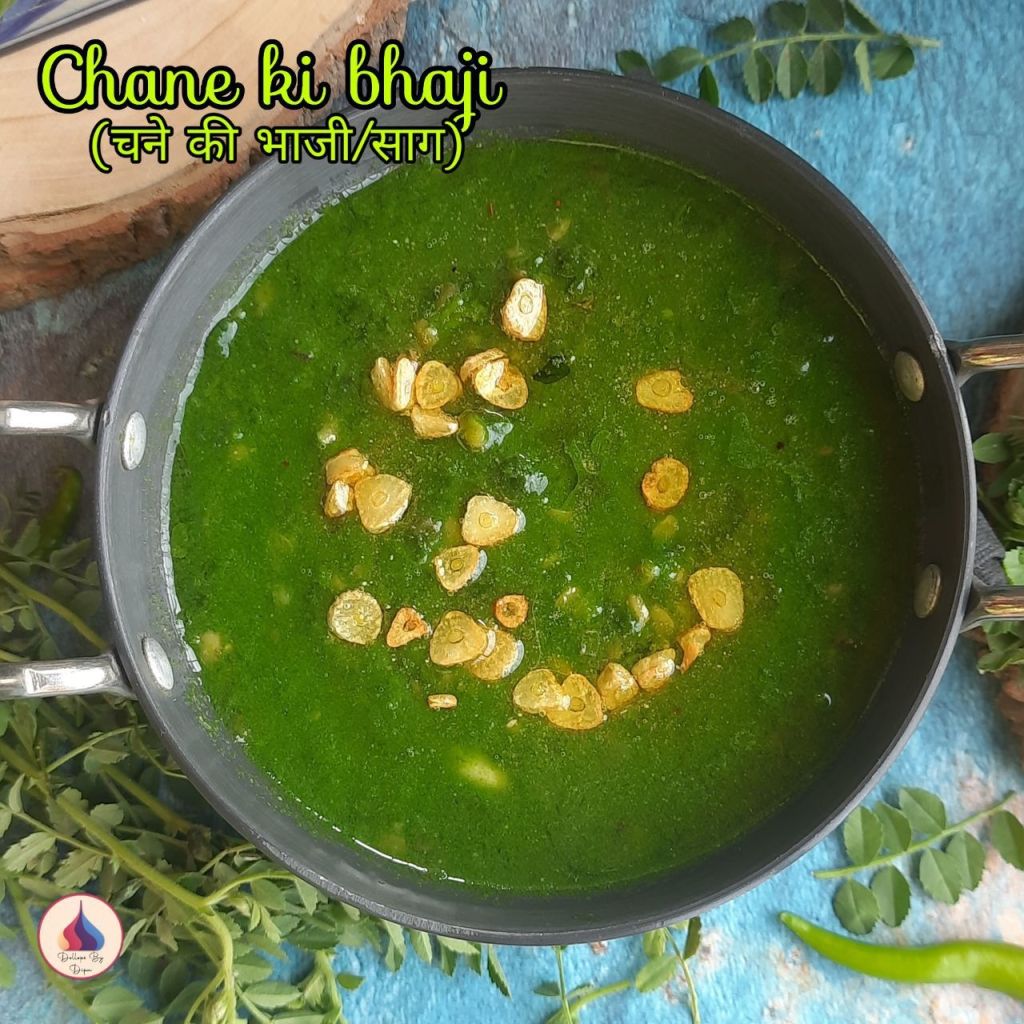
Winter in Indian kitchens brings along a treasure of seasonal greens, and Chane ka Saag is one such rustic gem. Made from tender chickpea leaves slow-cooked with moong dal, this humble dish comes straight from the heart of Bundelkhand cuisine. Known for its minimal use of spices and focus on natural flavours, Chane ka Saag Bhaji is nourishing, earthy, and comforting.
Traditionally cooked in iron kadais or clay pots and chopped using a hathiya, this saag celebrates simplicity and nutrition. The addition of wheat flour gives it a slightly coarse texture, making it hearty and filling. Best paired with makke ki roti, bajra roti, or ghee-laden phulkas, this winter-special saag is a perfect example of how local, seasonal ingredients create soulful meals.
Preparation Time: 10 minutes
Cooking Time: 20 minutes
Serves: 2 persons
Ingredients:
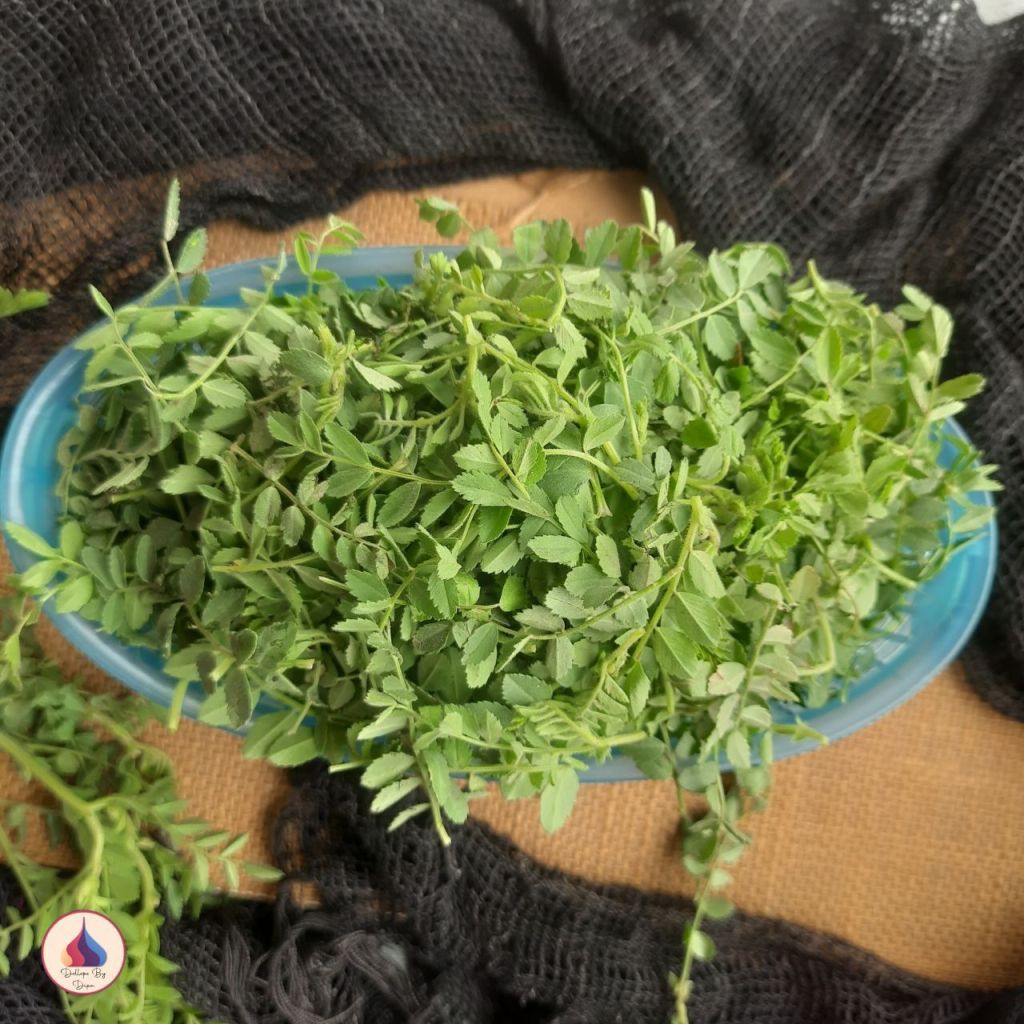
3 cups tightly packed, finely chopped chickpea leaves (chane ka saag)
1 tbsp split and skinned green gram (chilke wali moong dal)
2 tbsp wheat flour
Salt to taste
To grind into a paste:
1 cup chopped coriander leaves
8 garlic cloves
2 green chillies
1″ piece of ginger
For tempering:
1 tbsp mustard oil
3 garlic cloves, chopped
¼ tsp asafoetida (hing)
Method:
Wash and clean the chickpea leaves thoroughly and chop them finely.
Heat four cups of water in a vessel. Once it comes to a boil, add the washed split green gram and chopped chickpea leaves. Mix well and cook on low to medium flame for 3–4 minutes, stirring occasionally.
In a bowl, add water to the wheat flour and prepare a lump-free, thick batter. When the dal and saag are almost cooked, gradually add the flour batter while stirring continuously to avoid lumps. Add salt and cook for another 2–3 minutes.
Add the green paste, mix well, cook for just a few seconds, and turn off the heat.
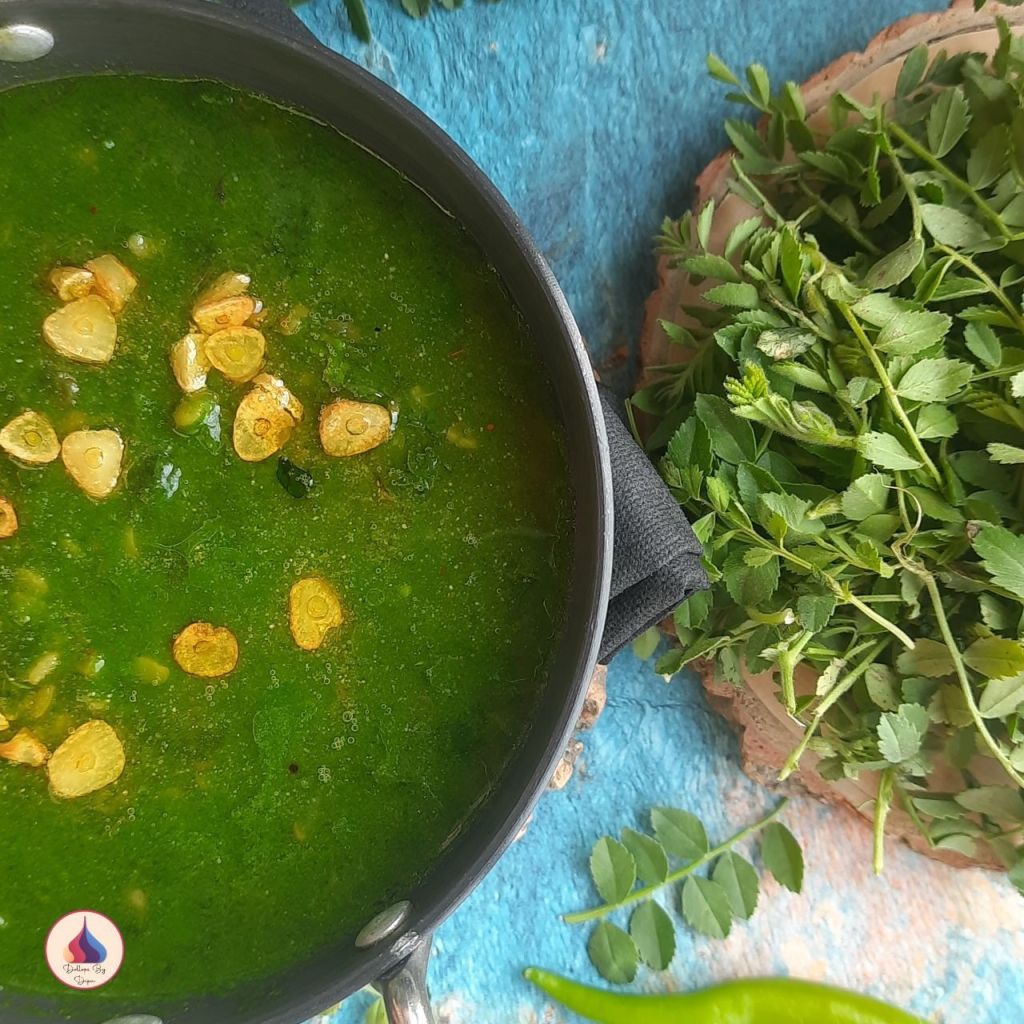
Prepare the tempering by heating mustard oil, adding chopped garlic and asafoetida. Pour this tempering over the saag.
Serve hot.
Tips:
Do not overcook after adding the green paste; otherwise, the vibrant green colour of the saag will turn dull.
Traditionally, this saag is chopped using a hathiya (traditional chopper), but a regular knife works well too.
*FAQ*
1. What are chickpea leaves (chane ka saag)?
Chickpea leaves are the tender greens of the chickpea plant, available mainly during winter. They have a mild, slightly nutty flavour and are rich in iron, fibre, and plant-based protein.
2. Can I make this saag without moong dal?
Moong dal adds body and nutrition to the dish. However, if unavailable, you may skip it or replace it with a small amount of chana dal, keeping the cooking time in mind.
3. Why is wheat flour added to this recipe?
Wheat flour helps thicken the saag and gives it a traditional coarse texture, making the dish more filling and rustic in taste.
4. Can I use gram flour (besan) instead of wheat flour?
Traditionally, wheat flour is used. Besan will change the flavour and texture, but it can be used if wheat flour is not available.
5. How do I retain the green colour of the saag?
Add the green paste towards the end and cook only for a few seconds. Overcooking after adding the paste can dull the vibrant green colour.
6. What oil is best for tempering this saag?
Mustard oil is traditionally used and gives an authentic flavour. If preferred, you may substitute it with ghee.
7. Can this saag be stored or reheated?
It tastes best when freshly prepared. If needed, you can refrigerate it for up to 24 hours and reheat gently on low heat.
8. Is Chane ka Saag healthy?
Yes, it is highly nutritious—rich in iron, fibre, vitamins, and plant protein. The minimal use of spices makes it light on the stomach and ideal for winter diets.

 DOLLOPS BY DIPA